

Scientists have officially described the first dinosaur fossil ever discovered in Antarctica. Although the fossil was found during a 1985 expedition by the British Antarctic Survey (BAS), researchers have only recently confirmed that it belonged to a dinosaur. The study was published in the scientific journal Acta Palaeontologica Polonica. The fossil is a single tail vertebra that was discovered by Dr. Mike Thomson on James Ross Island while studying rock layers. At the time, the research team was mainly searching for marine fossils such as ammonites to determine the age of the rocks. The dinosaur bone remained unidentified for decades until scientists reexamined it and confirmed its true identity.
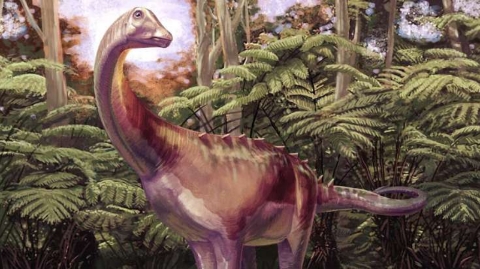
The fossil comes from the Santa Marta Formation and is about 82 million years old, dating to the Late Cretaceous period. Scientists believe the dinosaur died on land and its body was carried into the sea, where it eventually became buried in sediment and fossilized on the seabed. Researchers identified the animal as a member of Titanosauria, a group of long-necked plant-eating dinosaurs that included some of the largest land animals in Earth’s history. However, this individual was much smaller, measuring only about 6 to 7 meters (20 to 23 feet) long. It may have been a young dinosaur or a naturally small species.
Experts say the discovery is historically important because it represents the very first dinosaur fossil ever found on the Antarctic continent. During the Late Cretaceous, Antarctica was not covered by thick ice. Instead, it had lush temperate forests that provided enough food for large herbivorous dinosaurs. Scientists also believe many more dinosaur fossils may still be hidden beneath Antarctica’s ice. As climate change causes some ice to retreat, new fossil discoveries could reveal more about the continent’s ancient ecosystems.
The discovery also helps scientists understand how titanosaurs spread across the ancient southern supercontinent Gondwana, which connected Antarctica with South America, Australia, Africa, India, and New Zealand. Although titanosaur fossils are rare in Australia and New Zealand, this Antarctic discovery suggests these dinosaurs may have migrated through Antarctica when the southern continents were still connected. The research provides valuable new evidence about dinosaur evolution, ancient climates, and the history of life in one of the world’s most remote regions.
Source: phys.org