

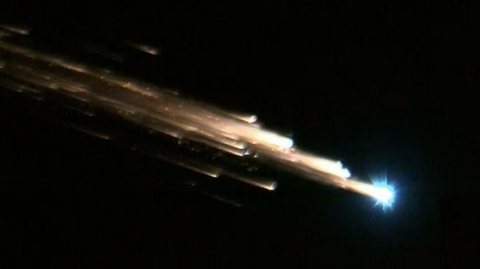
SpaceX has confirmed that it safely deorbited 260 Starlink satellites between December 1, 2025, and May 31, 2026. The company shared this information in a semi-annual regulatory compliance report submitted to the Federal Communications Commission (FCC). The satellites were removed through controlled atmospheric reentry, which is a planned process rather than a sign of technical failure. This highlights SpaceX’s strategy for safely managing the world’s largest commercial low Earth orbit (LEO) satellite constellation.
Controlled Deorbit Process
According to the filing, all 260 satellites successfully carried out automated deorbit maneuvers using their onboard Hall-effect thrusters powered by krypton or argon. These engines gradually lowered each satellite’s orbit until it entered Earth’s dense atmosphere. As the satellites reentered the atmosphere, they burned up completely due to extreme heat. This controlled process helps prevent the creation of long-term space debris and reduces the risk of collisions with other spacecraft.
Why SpaceX Retired These Satellites
Most of the retired satellites were early-generation Starlink v1.0 and v1.5 models launched between 2019 and 2021. Many had reached their expected operational lifespan of about five years, while others experienced battery or telemetry issues. Instead of waiting for aging satellites to fail completely, SpaceX intentionally deorbits them while they are still under control. This proactive approach reduces the chances of uncontrolled spacecraft remaining in orbit.
FCC Disposal Requirements
The FCC requires large satellite constellation operators to achieve a post-mission disposal reliability rate of at least 95 percent. This means inactive satellites should be safely removed instead of remaining in orbit for decades.SpaceX reported a disposal reliability rate of more than 99 percent. According to the company, most retired satellites reentered Earth’s atmosphere within six months after receiving deorbit commands.
Environmental Concerns
The increasing number of satellite reentries has attracted attention from regulators and scientists. One concern involves aluminum oxide, also known as alumina. When aluminum satellites burn up during reentry, they produce tiny alumina particles. Researchers are studying whether large amounts of these particles could affect the upper atmosphere, influence solar radiation, or contribute to ozone layer depletion. Environmental organizations are also asking regulators to require full environmental impact assessments under the National Environmental Policy Act (NEPA). If approved, satellite operators would need to study and report the environmental effects of their satellite fleets before receiving launch licenses.
New Starlink Satellites Replace Older Models
While retiring older satellites, SpaceX is rapidly launching newer Starlink v2 Mini and future Block 3 satellites using Falcon 9 and, eventually, Starship missions. These upgraded satellites offer greater network capacity, improved performance, and support for advanced technologies beyond consumer internet services. The newer designs can host orbital edge-computing systems capable of processing geospatial data and artificial intelligence workloads directly in space. Some versions also include secure military communication payloads, providing encrypted communication channels that remain separate from commercial internet traffic.
The retirement of 260 Starlink satellites is part of SpaceX’s planned fleet management strategy rather than an indication of widespread satellite failures. By replacing older spacecraft with more advanced models and safely removing retired satellites, the company aims to improve network performance while reducing the long-term risk of orbital debris. At the same time, the growing number of satellite reentries continues to fuel discussions about their environmental impact and future space regulations.
Source: satnews.com