
Humanity has taken another remarkable step in underwater exploration with the launch of the world’s first fully operational subsea habitat on the ocean floor. While people have lived aboard space stations for years, this new achievement allows researchers to live and work beneath the sea for extended periods. The habitat, named Vanguard, was developed by the ocean engineering company DEEP and is designed to function as a laboratory, living space, and diving base. A team of specially trained aquanauts will soon begin living inside the habitat, opening a new era of underwater scientific research and exploration.
Vanguard is installed on a permanent platform 17 meters below the surface at Tennessee Reef in the Florida Keys National Marine Sanctuary in the United States. The habitat can accommodate up to four crew members at a time and provides scientists with the opportunity to study marine life directly in its natural environment. Unlike traditional diving missions, where samples must be brought to the surface and may change because of pressure differences, researchers inside Vanguard can examine marine specimens in real time while maintaining the same underwater pressure. This allows for more accurate scientific observations and better understanding of deep-sea ecosystems.
The habitat operates like a large decompression chamber that carefully controls air pressure inside. Its occupants live as saturation divers, enabling them to remain underwater for weeks or even months instead of being limited to short scuba dives. Crew members receive air through a special umbilical system and can spend several hours working outside the habitat before returning safely. One of Vanguard’s most innovative features is its moon pool, an opening at the bottom of the structure that allows divers to enter and exit directly into the ocean without flooding the interior because the pressure inside and outside remains equal.
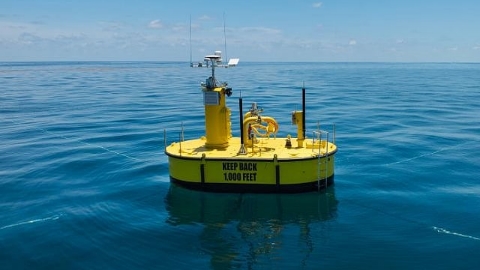
A floating buoy connected to the habitat supplies electricity, breathable air, and satellite communications, allowing the crew to remain in constant contact with support teams onshore. Vanguard also includes freshwater storage and a waste disposal system designed to safely remove wastewater without recycling it inside the habitat. These systems make long-duration underwater living both practical and safe for scientific missions.
Although Vanguard is currently focused on scientific research and marine ecosystem restoration, its future applications extend far beyond science. DEEP plans to launch a more advanced habitat called Sentinel by 2027, with the goal of supporting temporary or permanent human settlements across continental shelves worldwide. The company also envisions welcoming artists, historians, educators, students, and policymakers alongside scientists, giving more people the opportunity to experience life beneath the ocean and gain a deeper appreciation for the underwater world.