
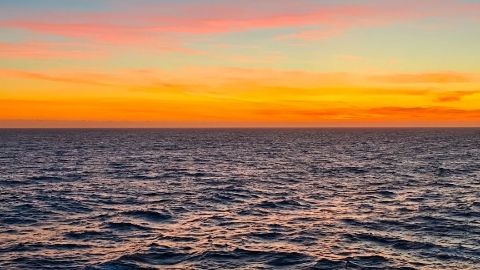
A massive marine heat wave is spreading across the Pacific Ocean and now covers about 13.5% of Earth’s surface. Scientists warn that this unusually warm ocean water could influence global weather over the coming months by increasing the risk of heatwaves, stronger storms, flooding, wildfires, and rising sea levels.
The marine heat wave stretches across a vast area of the Pacific Ocean, extending from waters near the Philippines to Peru, and north toward Hawaii and California. According to scientists, the affected area is more than eight times larger than the contiguous United States. Marine heat waves occur when ocean temperatures remain significantly warmer than normal for an extended period. These events are classified into Category 1 to Category 5, depending on their strength and duration.
Researchers say this event formed after two separate warm-water regions merged. One developed in the North Pacific, while the other was linked to a strengthening El Niño near the equator. Together, they created one of the largest marine heat waves observed in recent years. Scientists believe the impacts are already beginning to appear. The unusually warm Pacific waters are expected to strengthen weather systems by adding extra heat and moisture to the atmosphere. This can increase the intensity of storms and lead to more extreme weather in different parts of the world.
In the western United States, meteorologists warn that the marine heat wave could help create a powerful heat dome, increasing the likelihood of extreme temperatures and raising the risk of wildfires, particularly in areas north of New Mexico and Arizona. The warm ocean has also contributed to the development of Typhoon Bavi in the western Pacific by providing additional energy to the storm. Climate scientists warn that the effects may continue through this winter and next spring. They expect changes in rainfall patterns, stronger storms, and more frequent extreme weather events across several continents.
California could experience some of the most noticeable impacts. Experts estimate that warmer Pacific waters could temporarily raise coastal sea levels by 6 inches to 2 feet. When combined with powerful storms later this year, coastal flooding and storm surges could become much more severe. The influence of the marine heat wave is not expected to remain limited to the West Coast. Scientists believe it could strengthen the subtropical jet stream, leading to wetter and stormier conditions across the southern and eastern United States during the fall and winter seasons.
Researchers are continuously monitoring the Pacific marine heat wave, the developing El Niño, and the Pacific Meridional Mode, a climate pattern that helped create the current conditions. Early monitoring allows governments and communities to prepare for flooding, extreme heat, wildfires, and coastal hazards before they become more dangerous.
Officials recommend that people living in vulnerable regions stay informed through emergency weather alerts, review evacuation plans, prepare for possible flooding and wildfires, and protect their homes against heat and smoke. Scientists also note that marine heat waves have become far more common over the past few decades. Since the late 1980s, the portion of the global ocean affected by marine heat waves has increased from about 9% to more than 30%, while the area impacted by the strongest events has expanded nearly sixfold.
Climate researchers generally agree that reducing greenhouse gas emissions and transitioning from fossil fuels to cleaner, renewable energy sources will be essential to slowing global warming and limiting future ocean heat waves.