
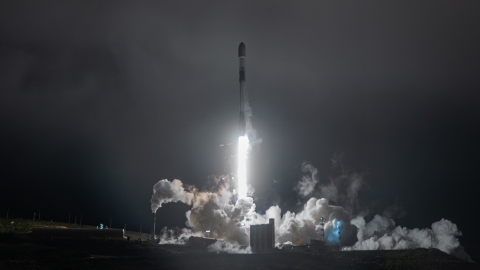
SpaceX successfully launched its Starship rocket on its 13th test flight from Starbase, Texas, marking the first mission since the company’s record-breaking IPO. The Super Heavy booster separated from the Starship spacecraft about two minutes after liftoff and performed a controlled splashdown in the Gulf, although SpaceX said the landing was harder than expected because only some of the booster’s engines restarted during the landing burn. Despite this issue, the mission achieved several important objectives and demonstrated continued progress in Starship’s development.
The Starship upper stage completed its planned mission and made a successful soft splashdown in the Indian Ocean. SpaceX confirmed that the spacecraft remained intact after landing, allowing engineers to inspect the heat shield in one piece for the first time after a full flight. Company employees referred to the mission as “Lucky Number 13” during the live broadcast because it delivered several significant achievements despite minor technical challenges.
One of the biggest milestones of the mission was the successful deployment of 20 new Starlink V3 satellites into orbit. This was the first in-flight test of the upgraded satellites, which are larger, more powerful, and equipped with solar arrays capable of producing twice as much electricity as previous Starlink generations. The satellites were designed to remain in orbit briefly before safely burning up in Earth’s atmosphere, allowing SpaceX to evaluate their performance during the mission.
SpaceX is developing Starship as a fully reusable launch system capable of carrying larger payloads into space at lower costs. The rocket is expected to play a key role in expanding the Starlink satellite network, supporting NASA’s upcoming Moon missions, and eventually transporting astronauts to Mars. The company is also developing Starmind satellites, which are planned to function as orbital data centers in the future, further expanding SpaceX’s ambitions beyond traditional satellite communications.
This mission was the second flight of the latest Starship V3 design. Industry analyst Tim Farrar said the test showed meaningful progress but noted that SpaceX still has significant work to do before achieving rapid and fully reusable operations. He pointed to the booster’s engine restart problem, warning that a similar issue during a landing at the launch site could damage the launch infrastructure. Earlier Starship launches were delayed because of bad weather and technical issues, highlighting the challenges involved in developing the world’s largest and most powerful reusable rocket.