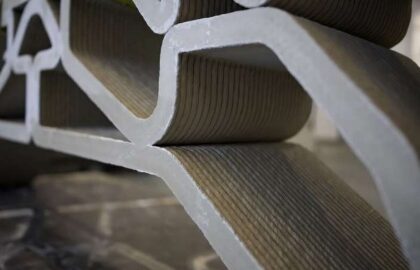

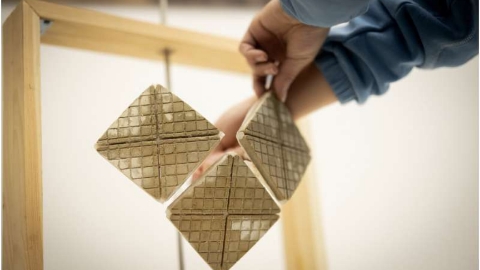
Researchers at the University of Pennsylvania have developed an innovative cement tile inspired by the skin of African elephants that can cool buildings naturally without using electricity. The new tile captures rain or sprayed water and releases it slowly through evaporation, reducing the surface temperature of buildings while lowering the need for energy-intensive air conditioning. The research was published in Advanced Materials and offers a promising solution for keeping cities cooler as global temperatures continue to rise.
African elephants survive the extreme heat of the savanna without sweating because their deeply wrinkled skin contains countless tiny cracks that trap water. When elephants spray themselves with water, these cracks hold the moisture for a long time, allowing it to evaporate gradually and cool their bodies. Inspired by this natural process, architect Dorit Aviv and materials scientist Shu Yang designed a cement-based building material that mimics the same cooling mechanism.
The researchers created the tiles by combining ordinary Portland cement with diatomaceous earth, a naturally porous material made from fossilized algae. During the manufacturing process, the material is carefully dried so that a controlled network of tiny cracks forms across its surface. Instead of weakening the tile, these engineered cracks serve as channels that spread water evenly while the microscopic pores store it like miniature reservoirs.
When water reaches the surface of the tile, it is absorbed within milliseconds instead of running off. The water then travels through the crack network, remaining trapped for extended periods even on sloped surfaces. As the water slowly evaporates, it continuously removes heat from the building’s exterior, providing cooling for up to 20 hours without the need for fans, compressors, or electricity.
Laboratory tests showed significant cooling performance. Under infrared heating, the temperature beneath the elephant-inspired tiles remained around 32°C, while cracked commercial stucco reached about 42°C and standard stucco climbed to approximately 52°C. According to the researchers, the new material can reduce building surface temperatures by about 6 to 11 degrees Celsius compared with conventional exterior finishes.
Unlike traditional air conditioning systems, which consume large amounts of electricity and release heat into the surrounding environment, the new tiles operate entirely through passive cooling. This approach not only lowers energy consumption but also helps reduce greenhouse gas emissions and limits the urban heat island effect that makes cities significantly hotter than surrounding areas.
The research team believes the technology is practical for large-scale construction because the cement mixture can be applied to buildings using existing spraying equipment. In the future, automated watering systems connected to weather forecasts could supply only the amount of water needed at the right time, maximizing cooling efficiency while minimizing water consumption. The researchers hope this nature-inspired design will help create more sustainable, energy-efficient buildings that remain comfortable even during increasingly frequent heat waves.