

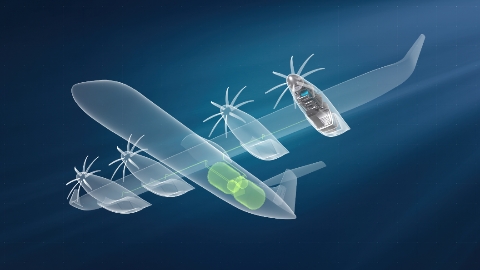
Air travel has transformed the way people travel around the world. However, commercial aircraft also produce large amounts of carbon dioxide (CO₂), nitrogen oxides (NOₓ), and other emissions that contribute to climate change. To reduce aviation’s environmental impact, Airbus is developing a new generation of hydrogen-powered passenger aircraft.
Airbus has officially partnered with Germany’s MTU Aero Engines to develop the world’s first fully electric hydrogen fuel cell propulsion system for commercial passenger aircraft. If regulatory approvals are completed as planned, the joint venture is expected to begin operations in 2027.
How the Hydrogen Engine Works
Unlike conventional jet engines that burn fossil fuels, the new propulsion system uses liquid hydrogen as its primary fuel. Inside the fuel cell, hydrogen reacts with oxygen through an electrochemical process. This reaction generates electricity instead of combustion. The electricity powers large electric motors and charges onboard batteries that help operate the aircraft efficiently. One of the biggest advantages of this technology is its clean emissions. Instead of releasing carbon dioxide like traditional jet engines, the fuel cell mainly produces water vapor as its byproduct, making it a much cleaner alternative for aviation.
Why Hydrogen Is Important
Many airlines are already using sustainable aviation fuels (SAF) to reduce emissions. However, Airbus believes hydrogen offers a more effective long-term solution because it can eliminate carbon dioxide emissions during flight. Liquid hydrogen also has a very high energy content while remaining lightweight, making it an attractive fuel for future aircraft.
Major Engineering Challenges
Although hydrogen fuel cells are promising, several technical challenges remain before they can be used in large passenger aircraft.Liquid hydrogen must be stored at approximately −253°C, requiring advanced cryogenic storage systems. It also occupies more space than conventional jet fuel, meaning future aircraft will need completely redesigned fuel tanks and airframes. Engineers must also develop safe storage, transportation, refueling, and airport infrastructure before hydrogen-powered aviation becomes commercially viable.
Airbus’ Long-Term Vision
Airbus first introduced its ZEROe hydrogen aircraft concept in 2020. The new agreement with MTU Aero Engines marks another major step toward turning that vision into reality. According to MTU’s Senior Vice President of Engineering and Technology, Stefan Weber, the goal is to build a safe, reliable, and cost-effective hydrogen propulsion system that can make aviation climate neutral. If development continues successfully, Airbus expects to launch hydrogen-powered commercial passenger aircraft by 2035. The company is also working with industry partners to build a global hydrogen aviation ecosystem, including airport refueling infrastructure and safety standards. Hydrogen-powered aircraft could dramatically reduce aviation emissions and reshape the future of sustainable air travel.